Regeneration - ROF Chorley

I spent the Christmas holidays this year on the edge of Chorley in a very comfortable modern house surrounded by an estate of equally nice houses. It had been a super busy year and we just needed somewhere easy to crash out with space to feed the family Christmas lunch and this Air BnB fitted the bill perfectly.
It wasn’t until we arrived at the house that I had even had a thought about the space the house was built on. My older male relatives remembered the site in its former life. My dad talked about the ‘secret’ railway station which he passed on the train north. My father-in-law about treating patients during his career who had worked there and were not allowed to talk about it! A bit of festive intrigue and for once I had time to do a bit of research and find out more.
The site that was now Buckshaw Village was one Royal Ordnance Factory Chorley. One and a quarter square miles of factory which covered all areas of explosive filling activities. Employing 28,000 people at peak production during the second world war. The site construction began in 1937 on a site chosen for its location away from densely populated areas. Limited production began in late 1938 with the site being officially opened by the King and Gracie Fields attended the workers completion party!
The factory was designed to be entirely self sufficient with its own water supply, electricity generators, medical centre (the new Buckshaw village also has its own new medical practice) Fire station, Police station and internal bus service. The site was made up of small workshops surrounded by earthworks to protect the rest of the site in case of a blast. There were administration offices, test laboratories. My Dad was right; there was a private railway station – ROF Holt. Nine miles of guarded perimeter fence surrounded the site.
The factory is famed with having produced the ‘Bouncing Bomb’ designed by Barnes Wallace and used in the famous Dambusters Raid in 1943.
As demand for munitions fell after the end of the war the factory adapted and was used for manufacture of concreate components for pre-Fab buildings and railway sleepers for the new nationalised British Railways amongst other things. The site production slowed and the site was closed in the mid-2000s. Most of the site was demolished and the land decontaminated before the new village was constructed.
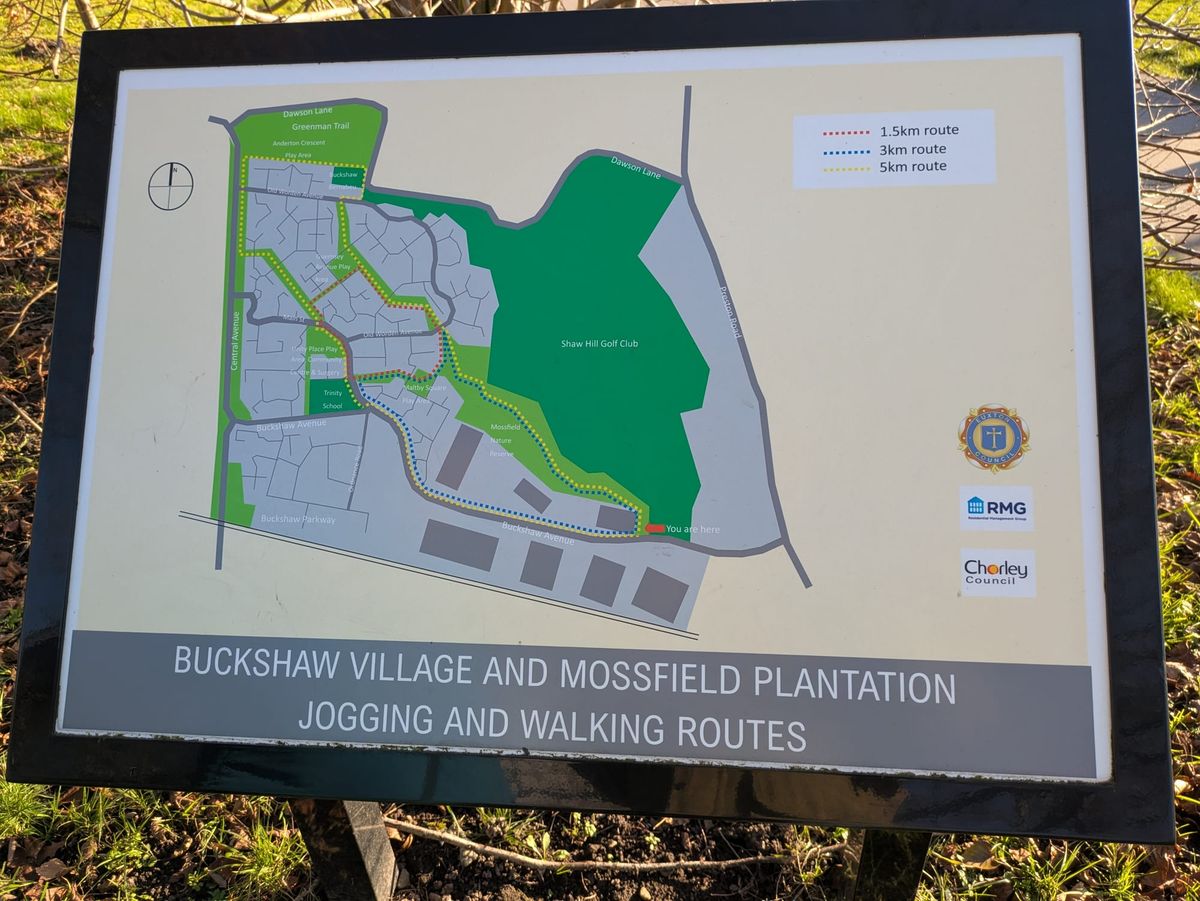
The new village has around 2000 homes, a school, supermarkets, and a retail park as well as several industrial sites. There is a community hub, medical centre, pubs and bars and a heritage centre. As a temporary resident I was impressed that from our location we could easily walk to the shops, pubs and supermarkets. Getting further afield was a little more complex with no obvious bus route on the site, however, the new Buckshaw Parkway station has regular trains to Manchester and Preston.
Having had some links to regeneration in my past career it is always interesting to see how sites like this can be repurposed and reused to serve a modern community and overall, I think a good job was done.